Credits
Every photograph on this site
Licences were checked on each source page on 18 November 2026. CC BY 4.0 stills are used on the website and credited; they are not placed in the typographic PDFs. CC BY-SA images, if any appear, are used on the website only, and are not placed in the downloadable fact sheets.
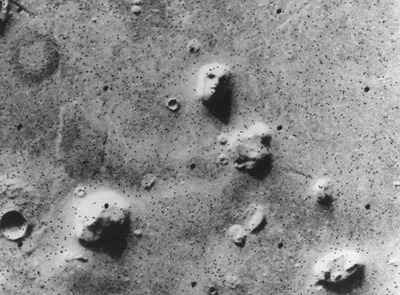
The official PIA01141 still, taken by NASA’s Viking 1 Orbiter on 25 July 1976 in the northern latitudes of Mars, while searching for a landing site for Viking 2. Official wording: the huge rock formation in the centre “resembles a human head” and “is formed by shadows giving the illusion of eyes, nose and mouth.” The speckled appearance is due to bit errors. This is the official 640 × 472 JPEG; a larger “Original (1669×1899)” offered on another NASA page is not treated here as the same still. Public domain, NASA/JPL-Caltech. Photo: NASA / Viking 1 Orbiter, 25 July 1976 · Public domain (NASA/JPL-Caltech) · NASA / JPL-Caltech 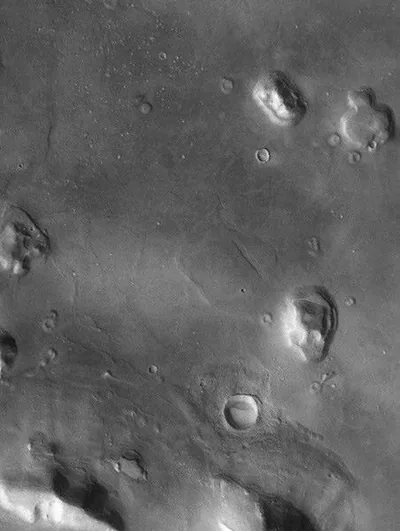
A mid-swath detail of the official PIA03768 JPEG (full file 452 × 1280), released 13 April 2002. Official wording: “The so called ‘Face on Mars’ can be seen slightly above center and to the right in this THEMIS visible image.” The caption does not, beyond that phrase, point to a single hill in this crop as “the” Face. This still is not given the 1976 “1.5 kilometers (one mile) across” figure; official THEMIS wording calls it a “3-km long knob.” Public domain, NASA/JPL-Caltech/Arizona State University. Photo: NASA / 2001 Mars Odyssey THEMIS, released 13 April 2002 · Public domain (NASA/JPL-Caltech/Arizona State University) · NASA / JPL-Caltech / Arizona State University 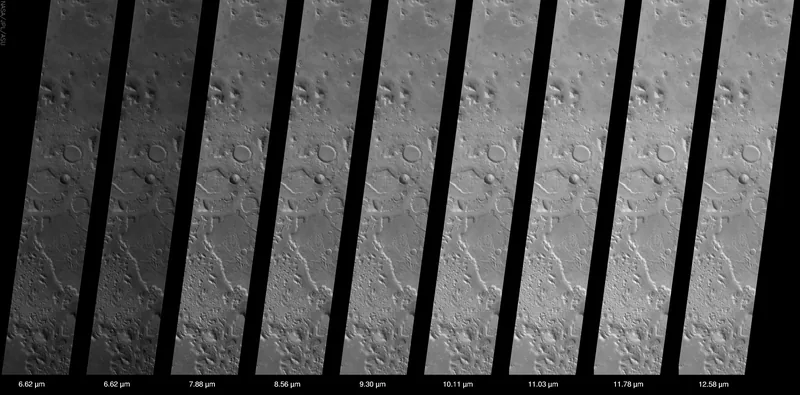
The official PIA03905 still, a THEMIS infrared view released 24 July 2002. Official wording: in this “big picture” view, Cydonia “is seen to be covered with dozens of interesting knobs and mesas that are similar in many ways to the knob named the “face” — so many in fact that it requires care to discover the “face” among this jumble of knobs and hills.” Public domain, NASA/JPL/Arizona State University. Photo: NASA / 2001 Mars Odyssey THEMIS, released 24 July 2002 · Public domain (NASA/JPL/Arizona State University) · NASA / JPL / Arizona State University 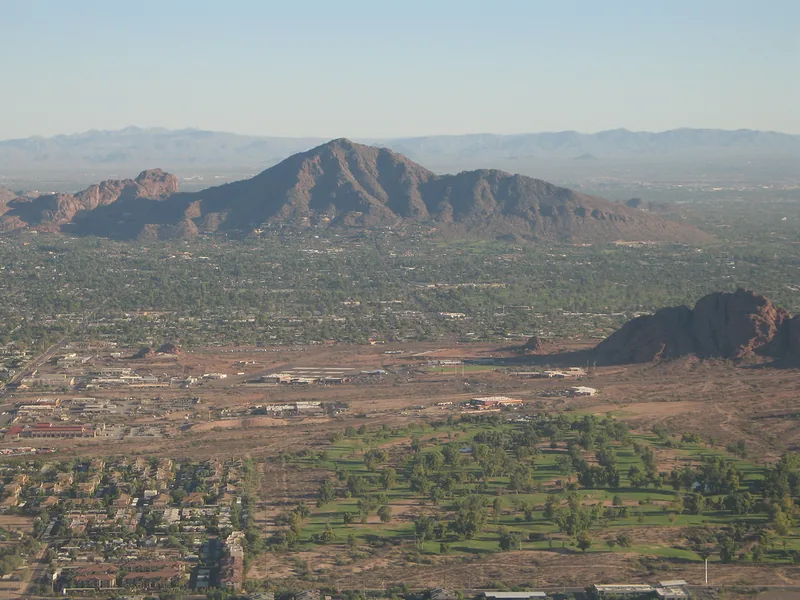
Camelback Mountain, near Phoenix, Arizona, photographed by Adrienne Lahr on 20 September 2007. A NASA THEMIS caption compares a Martian hill with “a similar-size hill in Phoenix, Arizona” that “resembles a camel lying on the ground,” and says “Phoenicians whimsically refer to it as Camelback Mountain.” This photograph is of that mountain; it is not a photograph of Mars. Licensed CC BY 2.0. Photo: Adrienne Lahr, 20 September 2007 · CC BY 2.0 · Wikimedia Commons / Flickr, Outdoorsy Lady 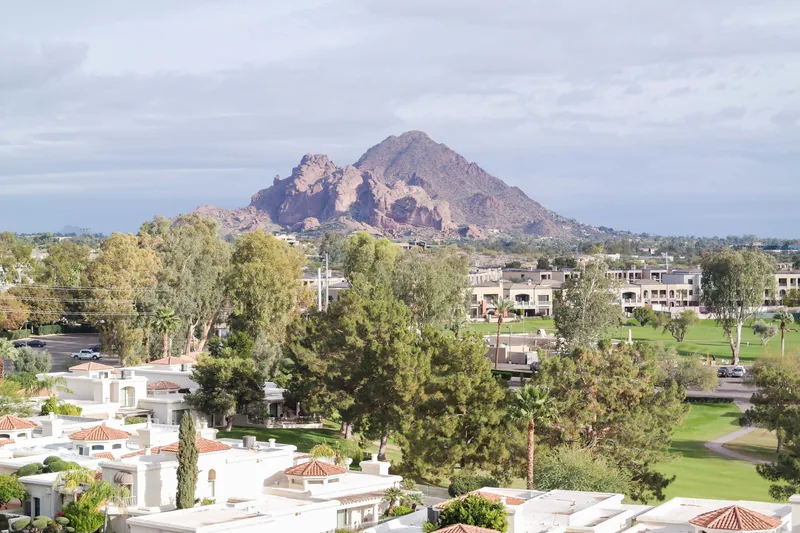
A view of Camelback Mountain seen from Wrigley Mansion, photographed by Visitor7 on 4 December 2013, as the file states. Official NASA wording about Phoenicians referring to the hill as Camelback Mountain stays with that official caption, not as a new claim about this particular viewpoint. Licensed CC BY-SA 3.0; used on the website only, not in the typographic PDFs. Photo: Visitor7, 4 December 2013 · CC BY-SA 3.0 · Wikimedia Commons 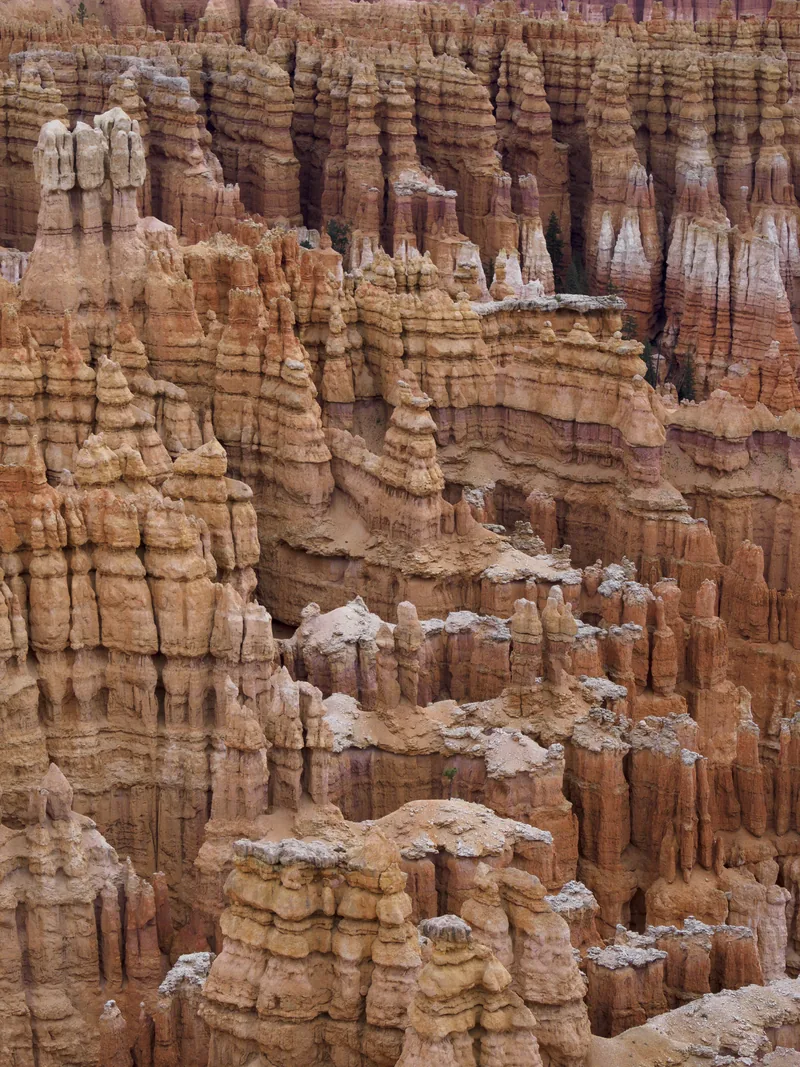
Hoodoos in Bryce Canyon National Park, Utah, photographed by Nhartmannphotos on 10 August 2023. The file describes “strikingly anthropomorphic shapes” produced by an unusual combination of geology, environment and elevation. That wording stays with the file; this site does not treat it as an official National Park Service caption. Licensed CC BY 4.0; used on the website, not in the typographic PDFs. Photo: Nhartmannphotos, 10 August 2023 · CC BY 4.0 · Wikimedia Commons 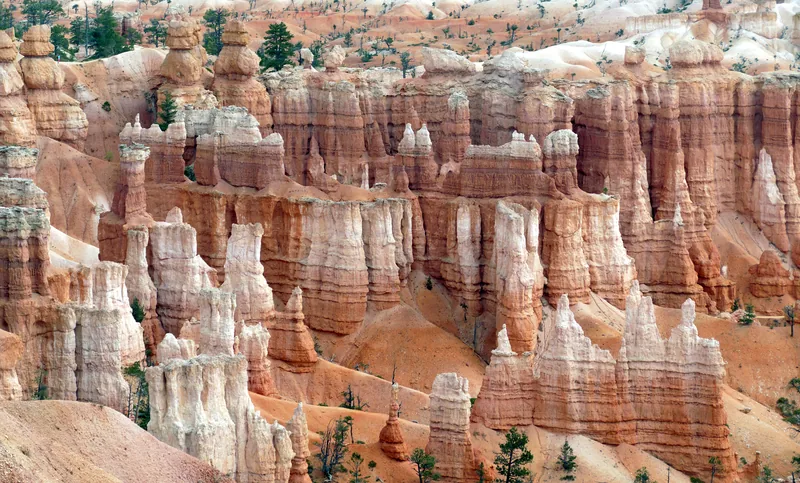
Hoodoos in Bryce Canyon, photographed by Bernard Spragg. NZ on 28 October 2016. The file lists other names for such forms — fairy chimneys, earth pyramids, tent rocks — as names, not as a single official geological term used here. Public domain dedication, CC0. Photo: Bernard Spragg. NZ, 28 October 2016 · CC0 · Wikimedia Commons / Flickr 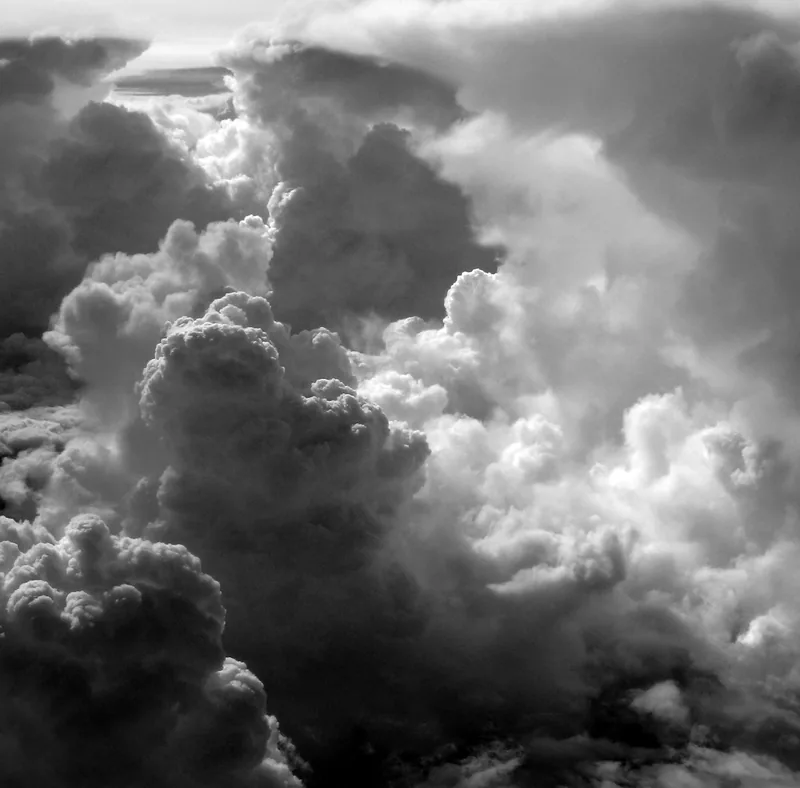
Cumulus clouds seen from a passenger plane, photographed by Kevin Dooley on 5 August 2007, as the file states. Encyclopaedia Britannica’s official example is that a person may see “images of animals or figures in clouds or rock formations.” This photograph is of clouds; this site does not name a particular animal or figure in it. Licensed CC BY 2.0. Photo: Kevin Dooley, 5 August 2007 · CC BY 2.0 · Wikimedia Commons 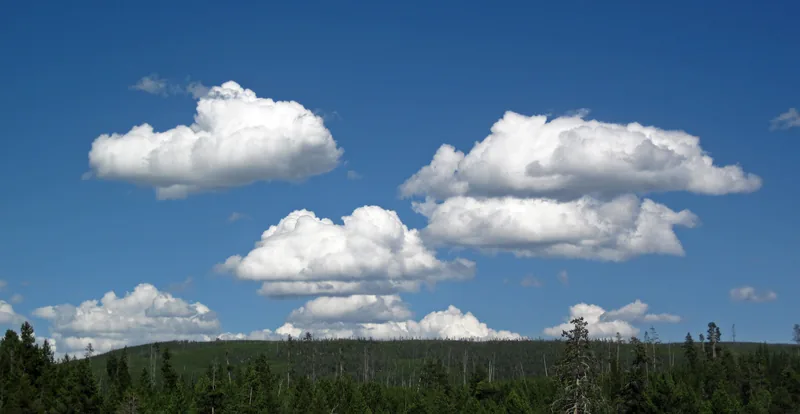
Cumulus clouds, photographed by James St. John on 9 July 2016 from Black Sand Basin, Upper Geyser Basin, Yellowstone, Wyoming, as the file states. Used here as a photograph of clouds, beside Britannica’s official example, not as a named figure in the sky. Licensed CC BY 2.0. Photo: James St. John, 9 July 2016 · CC BY 2.0 · Wikimedia Commons 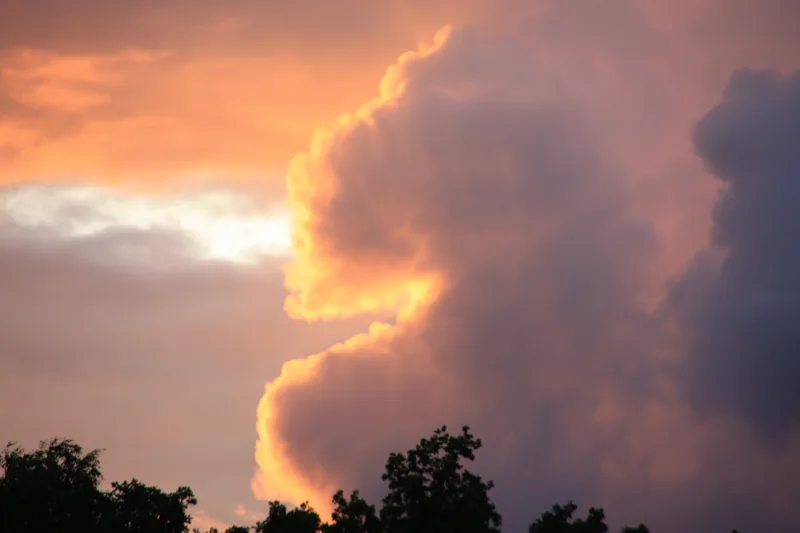
Sunset cumulus clouds in Latvia, photographed by Liga Eglite on 20 June 2011. The file description is “Pink cloud shapes. Latvia.” That file wording stays with the file; this site does not turn it into a named figure. Licensed CC BY 2.0. Photo: Liga Eglite, 20 June 2011 · CC BY 2.0 · Wikimedia Commons 
Cumulus humilis clouds, Tennessee, USA, photographed by Lee Ann Ratledge on 7 July 2014, as the file states. A photograph of clouds, used beside official wording about seeing familiar patterns in random stimuli, not as a portrait of a particular figure. Licensed CC BY 4.0; used on the website, not in the typographic PDFs. Photo: Lee Ann Ratledge, 7 July 2014 · CC BY 4.0 · Wikimedia Commons 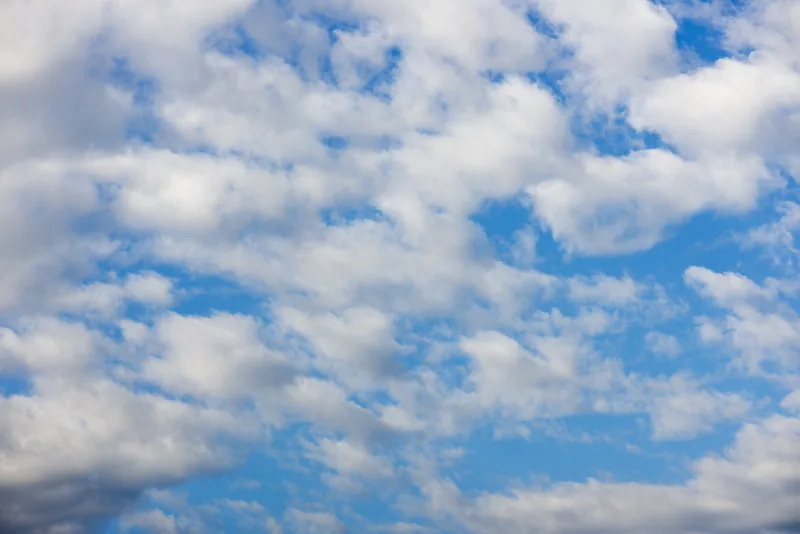
Cumulus humilis clouds, photographed by LiCheng Shih on 11 January 2018. The file does not name a figure in the clouds, and this site does not invent one. Licensed CC BY 2.0. Photo: LiCheng Shih, 11 January 2018 · CC BY 2.0 · Wikimedia Commons / Flickr
Enjoyed this desk of faces that are not there?
No pop-ups. No intrusive advertising. Just interesting stuff. A little support helps the next illusions.im site get built.